
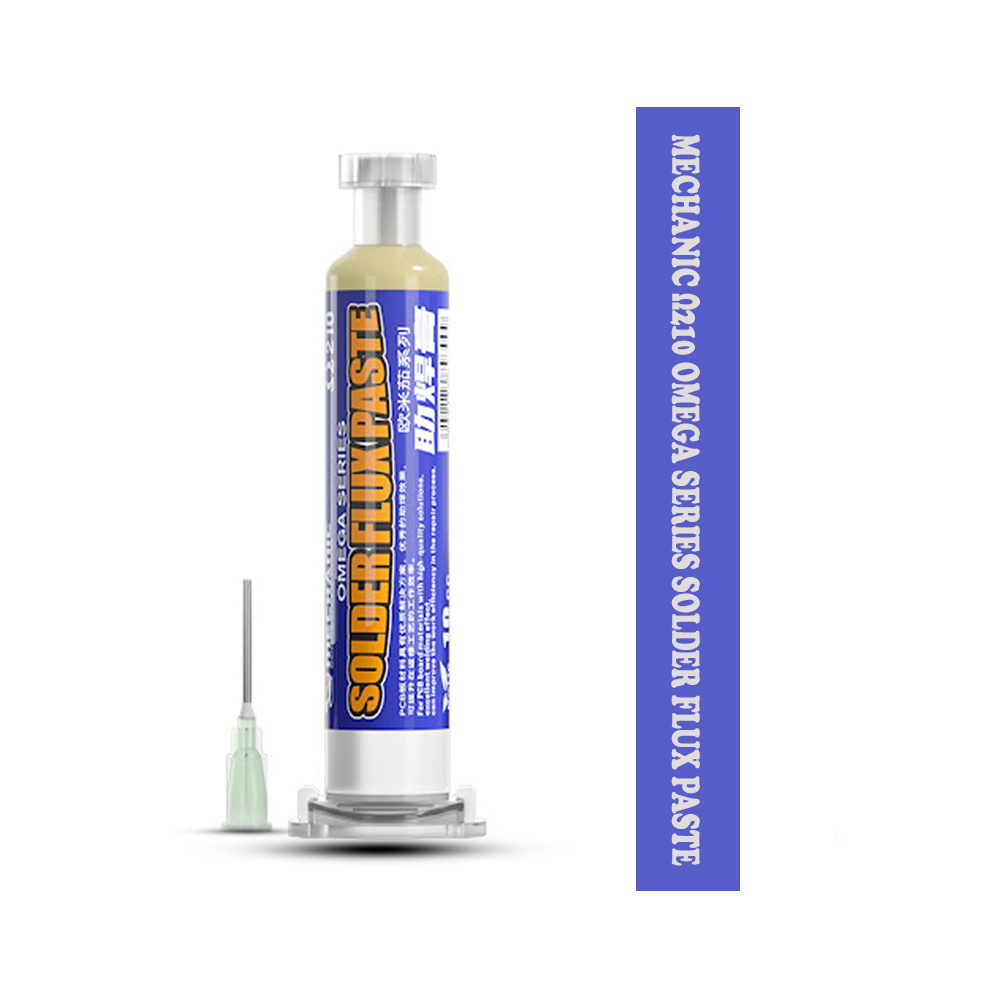
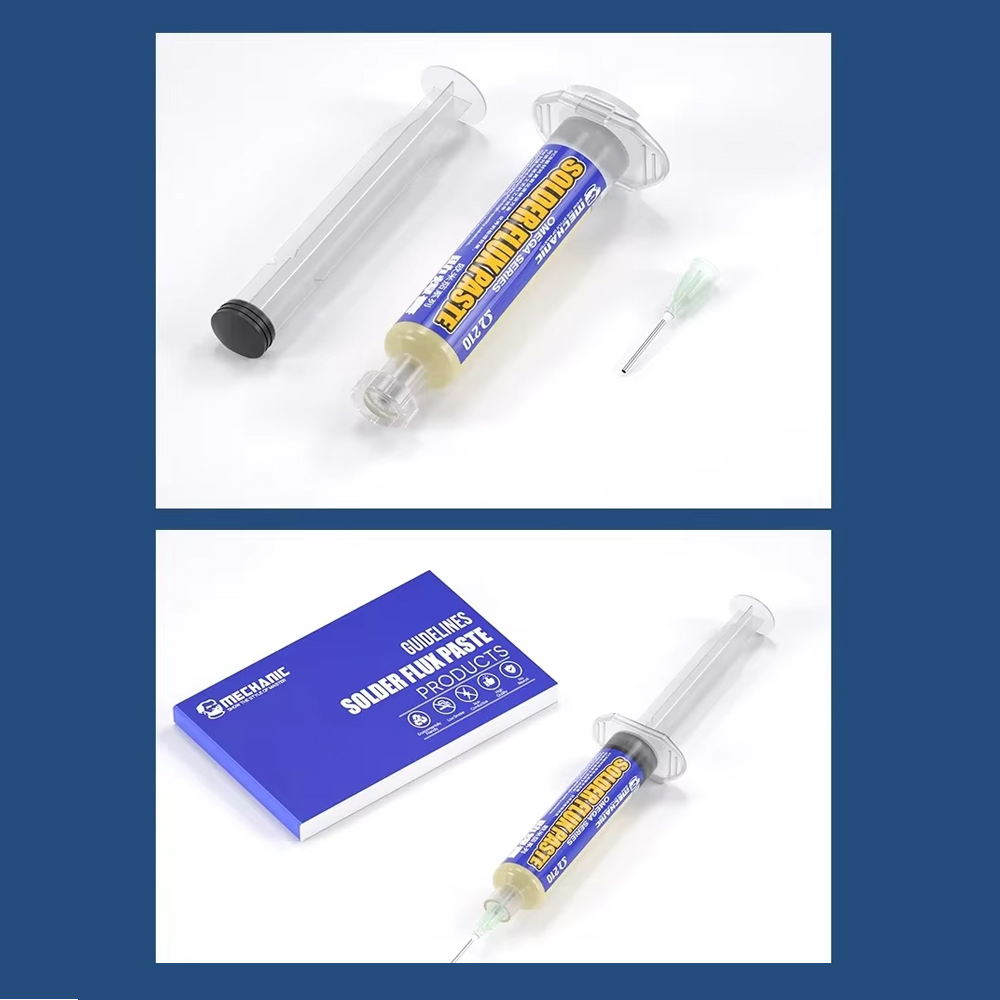
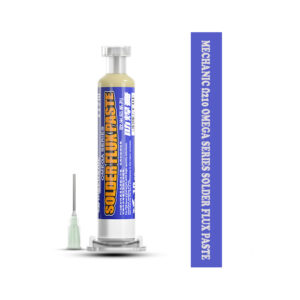
Mechanic 210 Omega Series Solder Flux Paste
What is Mechanic 210 Omega Series Solder Flux Paste used for?
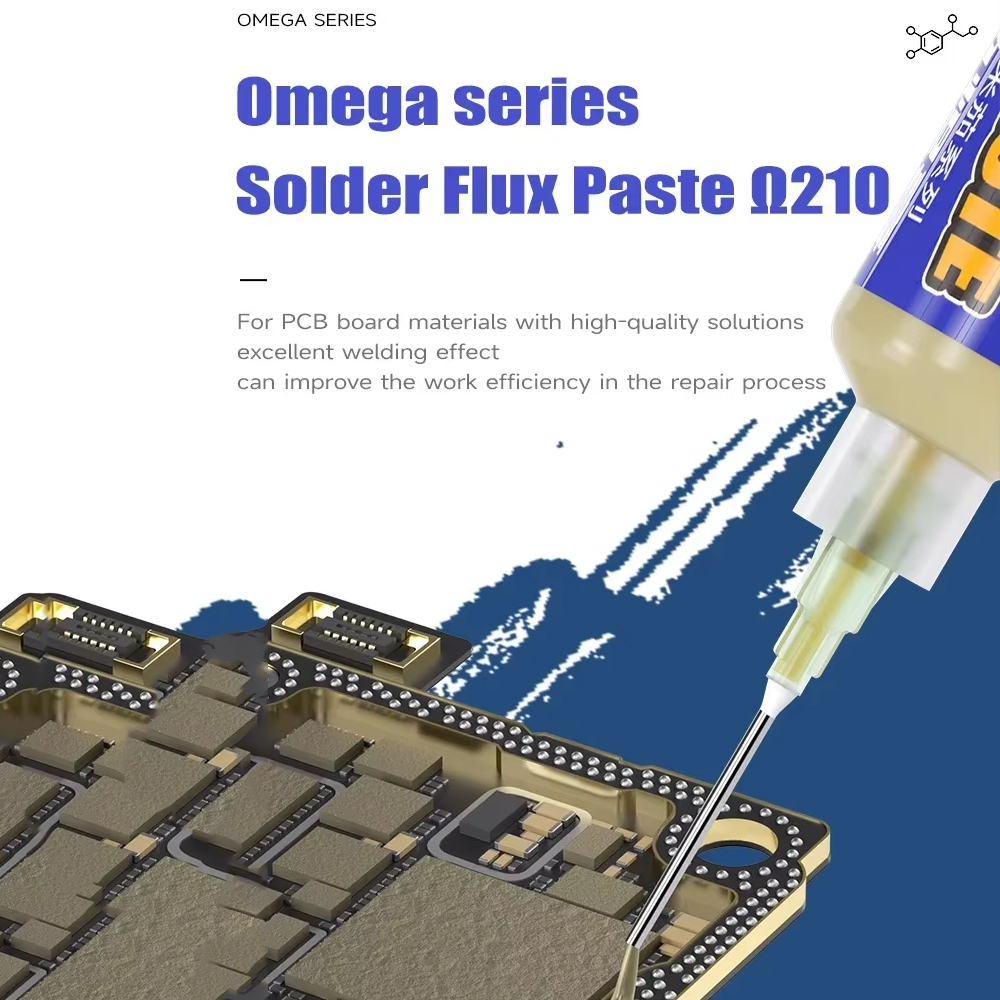
Mechanic 210 Omega Series Solder Flux Paste is a high-grade soldering flux paste formulated for precision electronic board repairs, BGA reballing, surface-mount (SMD) rework, and micro-soldering delicate connectors and micro-resistors on mobile phones and computers.
How does Mechanic 210 perform under high temperatures?
It features an advanced thermal stabilizer that prevents the paste from charring, drying out, or boiling prematurely during extended hot-air reflow and soldering iron passes.
Does it improve solder conductivity and joint strength?
Yes. It actively strips surface oxides from copper pads and component leads, promoting rapid capillary wetting to produce bright, low-resistance, and crack-free solder joints.
Is Mechanic 210 Omega Series Solder Flux Paste suitable for PCB maintenance?
Yes. It cleans solder points by dissolving surface oxidation and contaminants, making it ideal for pad rejuvenation before placing new chips or jumpers.
Fulfillment Hub: Dispatched directly from RS TECHWEAR.
National Logistics Reach: Same-day dispatch across Delhi-NCR and nationwide shipping across all Indian pin codes via express air and surface cargo.
Mechanic 210 Omega Series High-Performance Solder Flux Paste for Mobile Phone BGA & PCB Micro-Soldering
Superior Wetting & Fluidity: Accelerates tin flow across micro-scale pads to form bright, solid, and reliable solder joints.
Engineered for BGA/IC Rework: Ensures smooth, uniform collapse of solder balls during BGA chip removal, pad preparation, and reballing.
High-Temperature Thermal Stability: Resists premature drying, scorching, or carbonizing under direct hot-air wand heating.
Precision Electronics Versatility: Ideal for delicate smartphone logic board connectors, micro-resistors, charging ICs, and jumper wires.
Non-Corrosive Clean Finish: Formulated to safeguard miniature copper traces from chemical degradation and long-term signal leakage.
Product Overview
During micro-soldering operations—such as CPU reballing, power management IC rework, or display connector replacements—maintaining flux activity under continuous heat is crucial. Low-grade fluxes burn away quickly, leaving behind burnt residue that weakens solder connections and creates bridging risks.
The Mechanic 210 Omega Series Solder Flux Paste provides consistent thermal stability and active oxide reduction throughout intensive rework cycles. By minimizing surface tension and neutralizing copper oxide films,Mechanic 210 Omega Series Solder Flux Paste ensures rapid, defect-free wetting across tiny surface-mount pads. Its balanced consistency prevents component drifting while protecting sensitive logic board substrates from excessive thermal stress.
Key Technical Specifications
| Specification | Details |
| Brand | MECHANIC |
| Series | 210 Omega Series |
| Product Type | High-Performance Solder Flux Paste |
| Application Method | Syringe / Dispensing Needle / Bench Spatula |
| Thermal Profile | High thermal tolerance; compatible with leaded & lead-free alloys |
| Primary Uses | Mobile motherboard repair, BGA reballing, SMD IC rework, connector fixes |
| Residue Profile | Low, non-corrosive residue (easily cleanable with Isopropyl Alcohol) |
| Fulfillment Hub | Genuine stock dispatched from RS TECHWEAR, Delhi |
FAQ Section
Q1: How does Mechanic 210 differ from standard rosin paste?
Mechanic 210 Omega Series Solder Flux Paste contains refined activators designed specifically for miniature SMD components, providing better capillary action on micro-pads and far higher resistance to thermal breakdown than ordinary rosin.
Q2: Does Mechanic 210 require cleaning after soldering?
While the residue is non-corrosive, cleaning the board with isopropyl alcohol (IPA) after rework is recommended to achieve a clear, professional inspection finish before conformal coating or housing reassembly.
Q3: Can Mechanic 210 be used with low-temperature and lead-free solders?
Yes. It supports a wide thermal window, working effectively with 138°C low-temperature bismuth alloys, 183°C standard Sn63/Pb37 solder, and 217°C lead-free alloys.

Mechanic 210 Omega Series Solder Flux Paste
Website – rstechwear.com
Follow us on Instagram- RSTECHWEAR
Reviews
There are no reviews yet.